Museum of the Future Architecture Explained – Shape, Calligraphy, Structure
Explore the architecture of Dubai's Museum of the Future: discover what the torus shape means, how the Arabic calligraphy works, and the engineering behind the facade.
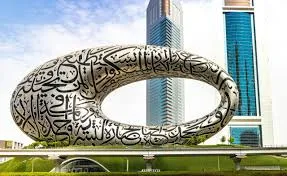
The Museum of the Future is more than a futuristic ring of steel and glass on Sheikh Zayed Road. Every curve, every opening, and every line of Arabic script on its surface is loaded with symbolism.
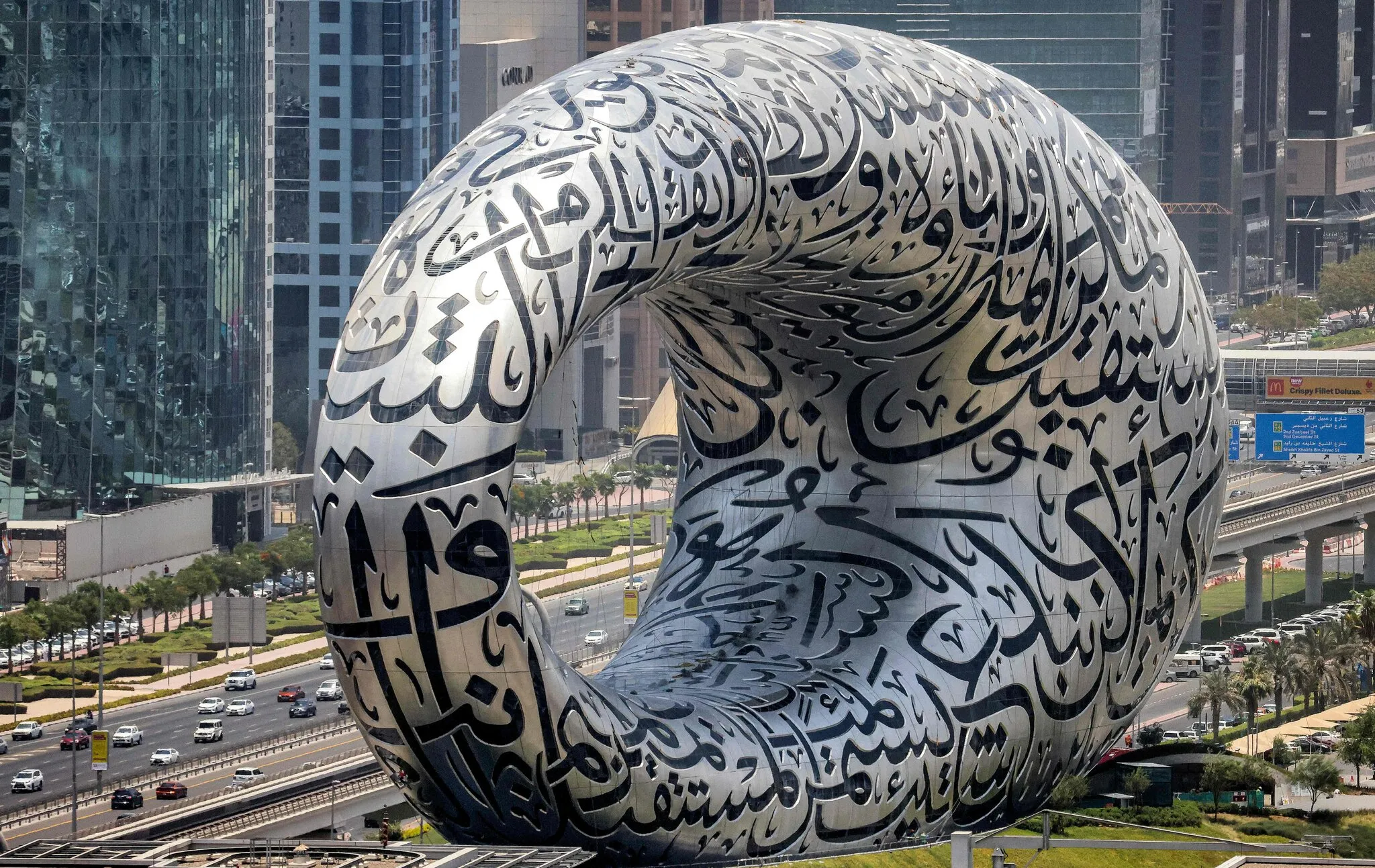
What the shape really means
You will often hear guides say that the building combines three elements:
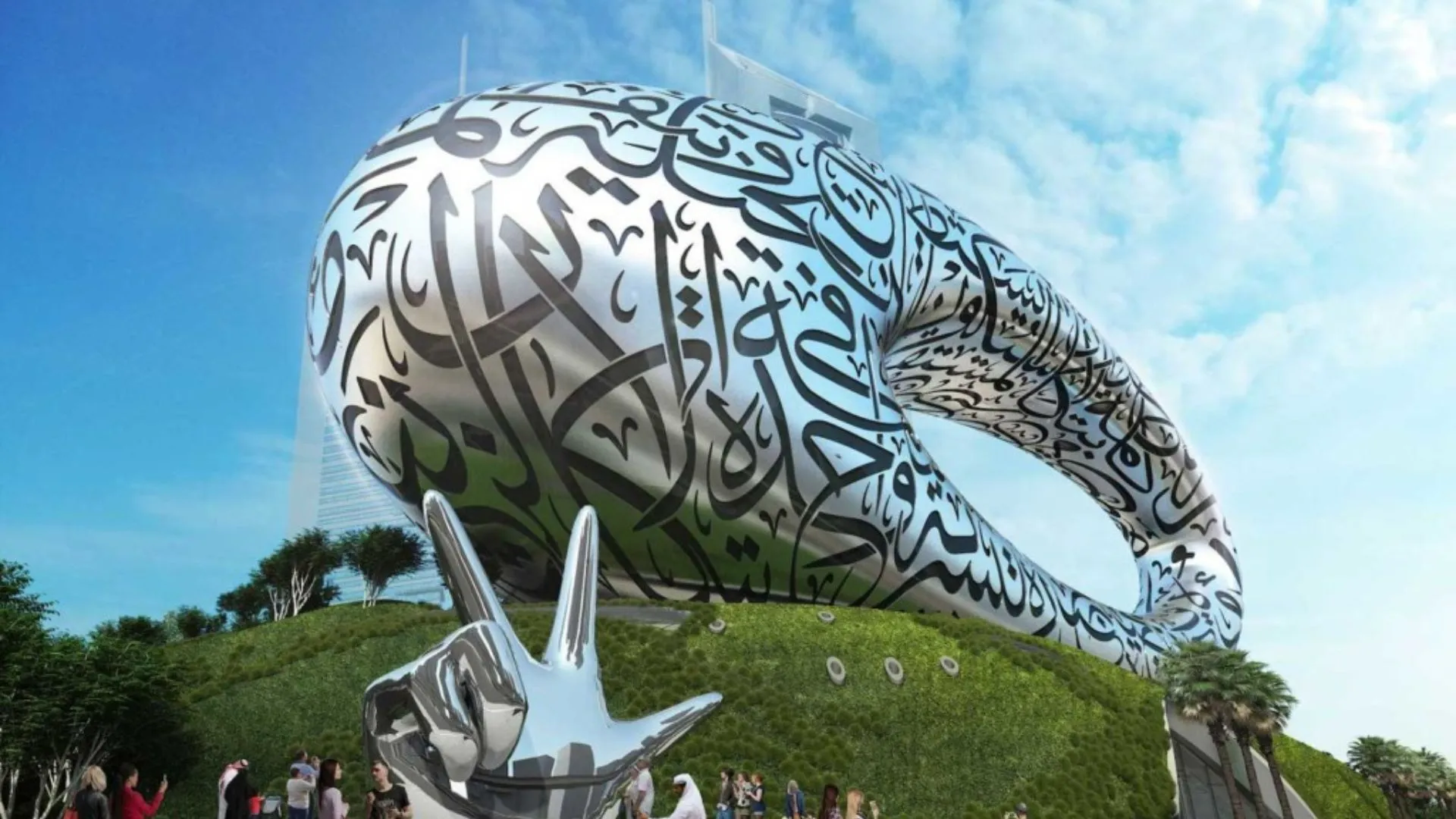
- The green hill (the podium) – representing the Earth and deeply rooted traditions.
- The gleaming torus (the building) – symbolizing humankind's innovation and capability.
- The void at the center – reflecting the unknown future that humanity is still shaping.
Seen from afar, it is not just a ring; it is like a loop of possibility anchored to the ground but open at its core.
The void is just as important as the walls. It stands for questions, not answers.
Arabic calligraphy as a light source
The flowing script that wraps around the facade is not merely decorative. It is literally cut into the cladding, acting as windows that bring light inside.
Whose words are written on the facade?
The calligraphy features quotes from Sheikh Mohammed bin Rashid Al Maktoum, Ruler of Dubai, about the future, innovation, and leadership. Paraphrased, they say things like:
- The future belongs to those who can imagine it.
- You cannot live off past achievements forever.
- Innovation is not an option; it is a necessity.
At night, the words glow from within, turning the building into a luminous poem about tomorrow.
How the structure stands up (in simple terms)
Under the smooth skin lies an intricate diagrid steel frame. Instead of traditional columns, a web of intersecting beams distributes loads across the oval form.
| Element | Role in the building |
|---|---|
| Steel diagrid | Bears the main structural loads |
| Concrete podium | Anchors the torus to the ground |
| Calligraphy cutouts | Function as both windows and art |
Together, they allow the building to appear almost column-free inside, giving the exhibition floors generous open spans.
Sustainability and smart systems
The Museum of the Future also embodies Dubai's sustainability ambitions:
- Smart controls optimize lighting and air conditioning, reducing energy use.
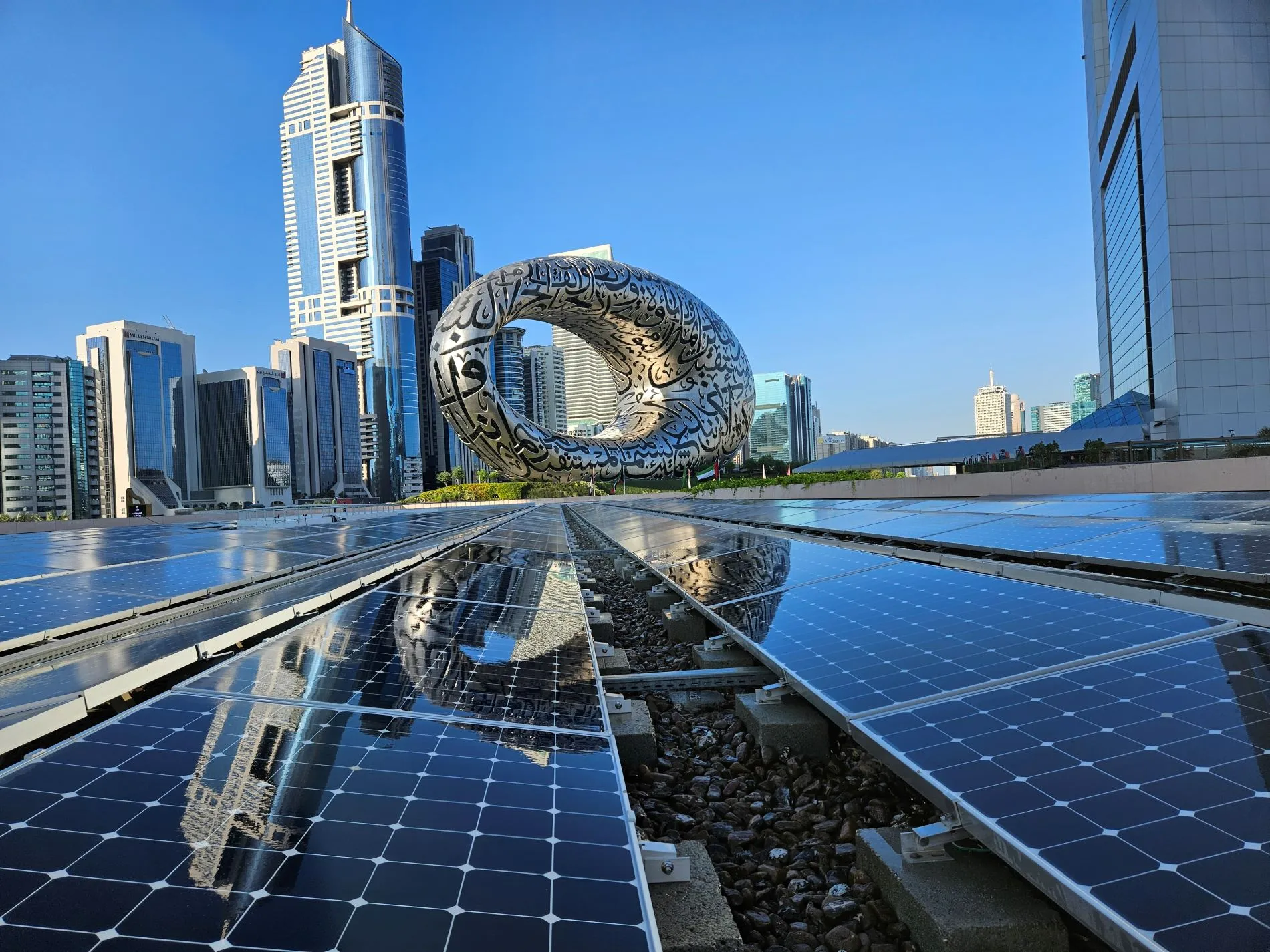
- Portions of the energy demand are supplied by solar panels integrated nearby.
- Materials were selected with durability and performance in mind, reducing long-term waste.
How to best experience the architecture
Here is a simple loop to follow outside before or after your timed ticket:
- Start from the Sheikh Zayed Road side for a classic postcard view.
- Walk around the green hill, noticing how the building rises from it.
- Stand under the central void and look straight up.
- Spot the different calligraphy lines and their varying thickness.
- Return after sunset to see the facade light up.
Consider doing a slow 360-degree walk around the museum. Small changes in angle dramatically alter how the torus and void frame the skyline.
Final thought
The Museum of the Future is a rare example of a building that looks like a rendering brought to life yet remains rooted in the local language, climate, and ambition. To truly appreciate it, give yourself time not just to go inside, but to simply stand outside and look.
Architecture-lover's checklist
- View the building from at least three different angles.
- Stand directly under the central void and look up.
- Notice how the calligraphy frames the skyline behind it.
- Visit once in the day and once after dark, if possible.
Try sketching the outline of the building in a notebook. You will quickly realize how unusual its geometry is compared to standard towers.
Mini FAQ for design enthusiasts
Can I explore the exterior without a ticket?
Yes. You are free to walk around the green hill and photograph the building from public areas even if you do not have an interior ticket.
Is there a best side for photos?
Not really – but many photographers prefer slightly off-center angles where you can see both the torus and part of the void at once.
Does the calligraphy look different from inside?
Yes. From inside, the script becomes a series of light portals, casting intricate patterns on floors and ceilings as the sun moves.
Once you have seen how the building is put together, the museum stops being just a backdrop for selfies and starts to feel like a three-dimensional manifesto about the future.
About the Author

UAE Architecture Writer
I created this guide to help you approach the Museum of the Future with curiosity, clear expectations, and a few insider tips, so you can focus on enjoying the experience instead of worrying about logistics.
Tags
Comments (0)
Loading comments...