A story of imagination in the heart of Dubai
From concept sketches to a glowing torus of calligraphy, the Museum of the Future traces Dubai’s belief that the future is something we can design together.
Table of Contents
Seeds of an idea: imagining a future museum
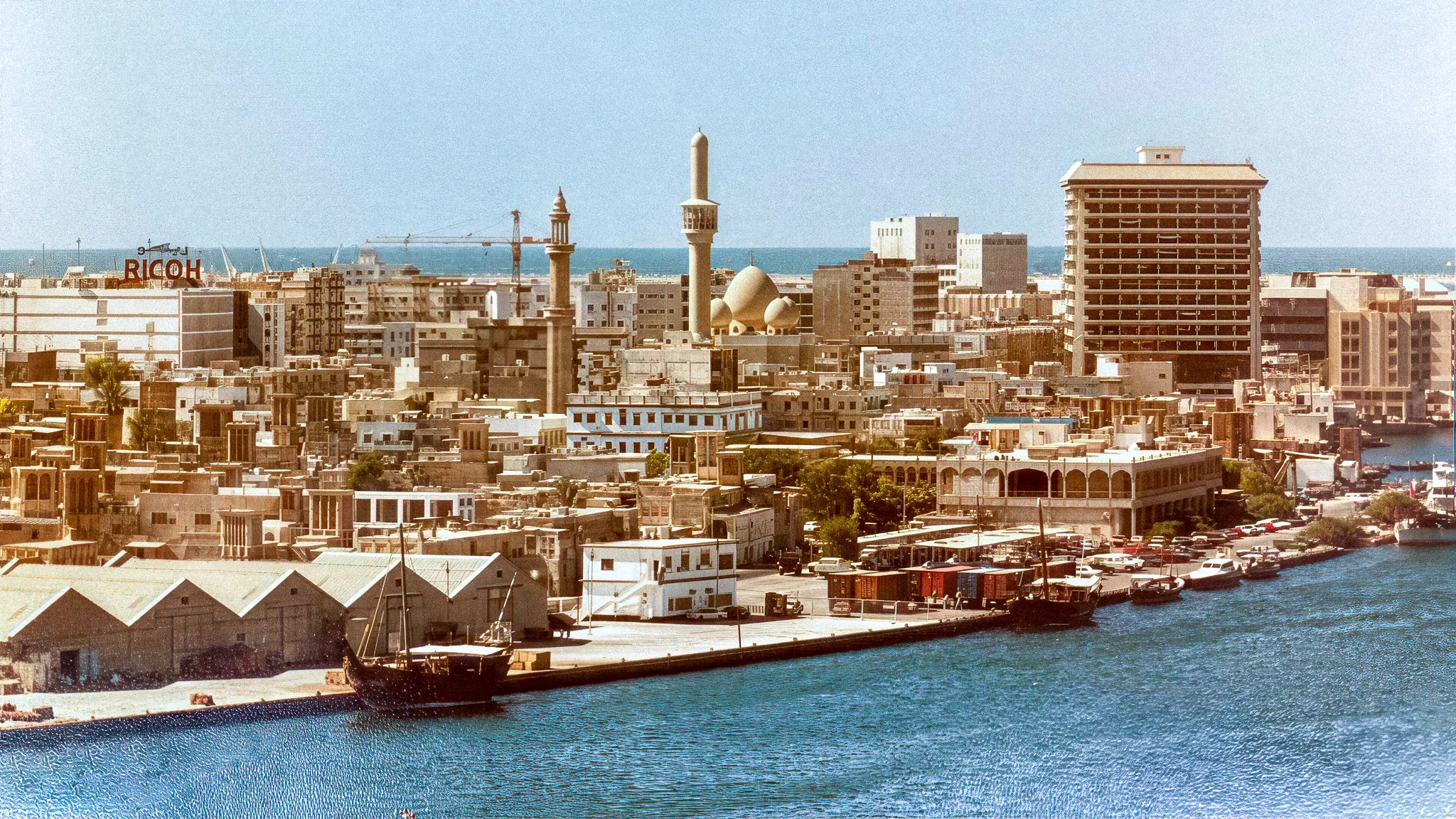
Long before the Museum of the Future opened its doors, the idea behind it began as a question: what if a museum could focus not on the past, but on the possibilities of tomorrow? In a city already known for record‑breaking towers and ambitious projects, Dubai’s leaders imagined a space where innovators, thinkers, and everyday visitors could gather around prototypes, experiments, and scenarios rather than static relics. The goal was not to predict the future with certainty, but to create a place where different futures could be explored, debated, and experienced firsthand, sparking fresh conversations about responsibility, opportunity, and imagination.
This vision slowly coalesced through conferences, future‑focused initiatives, and discussions within the United Arab Emirates about how technology and human creativity might shape the country’s next chapters. As the idea matured, the concept of a ‘museum’ expanded beyond galleries filled with objects to an evolving hub, where exhibitions would be updated regularly, and visitors would be invited to step into narrative worlds. In this way, the seeds of the Museum of the Future echoed a broader ambition in Dubai: to be not only a place that showcases innovation, but a living platform where new ideas are tested, refined, and shared with the world.
Designing a landmark: architecture and calligraphy
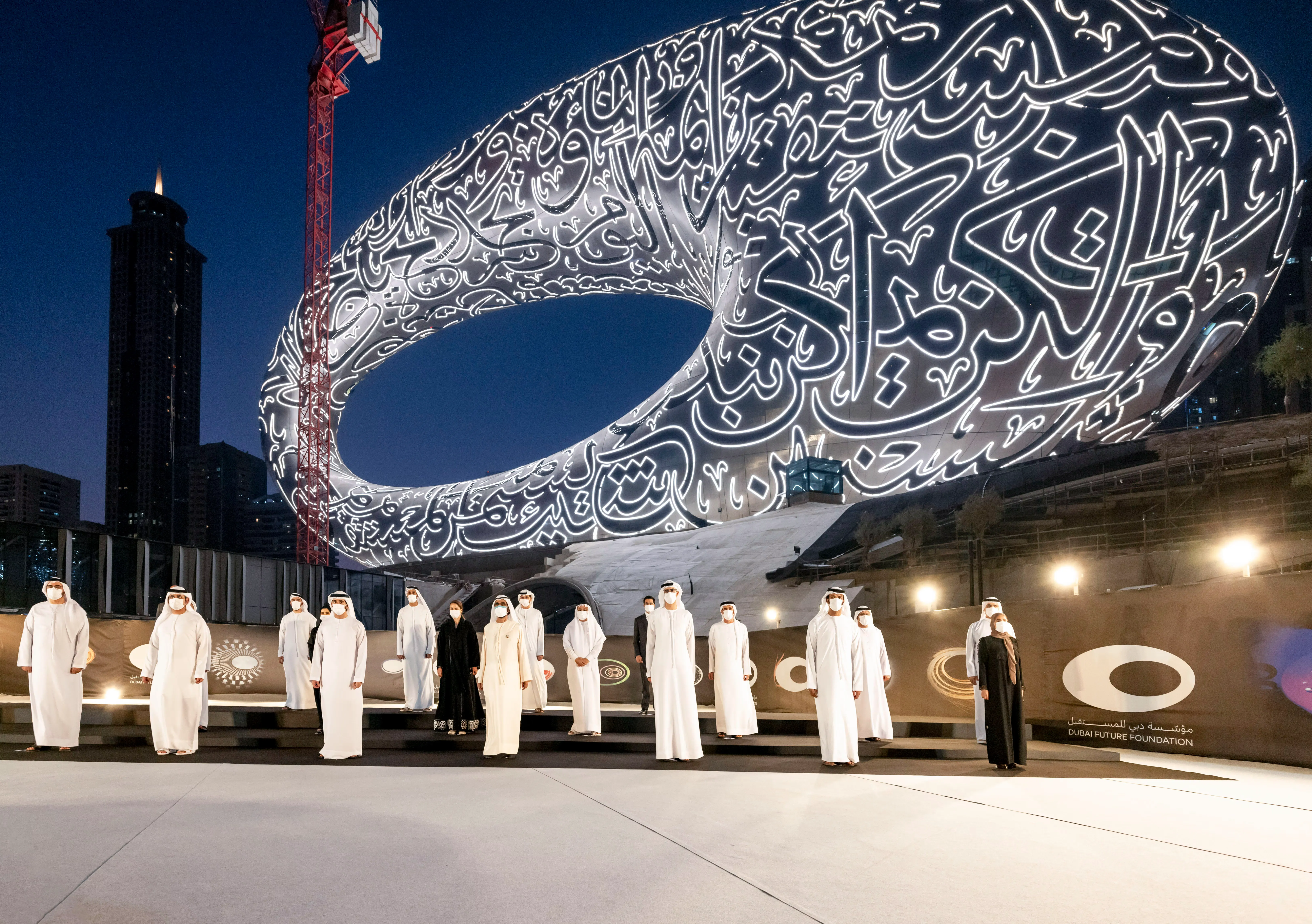
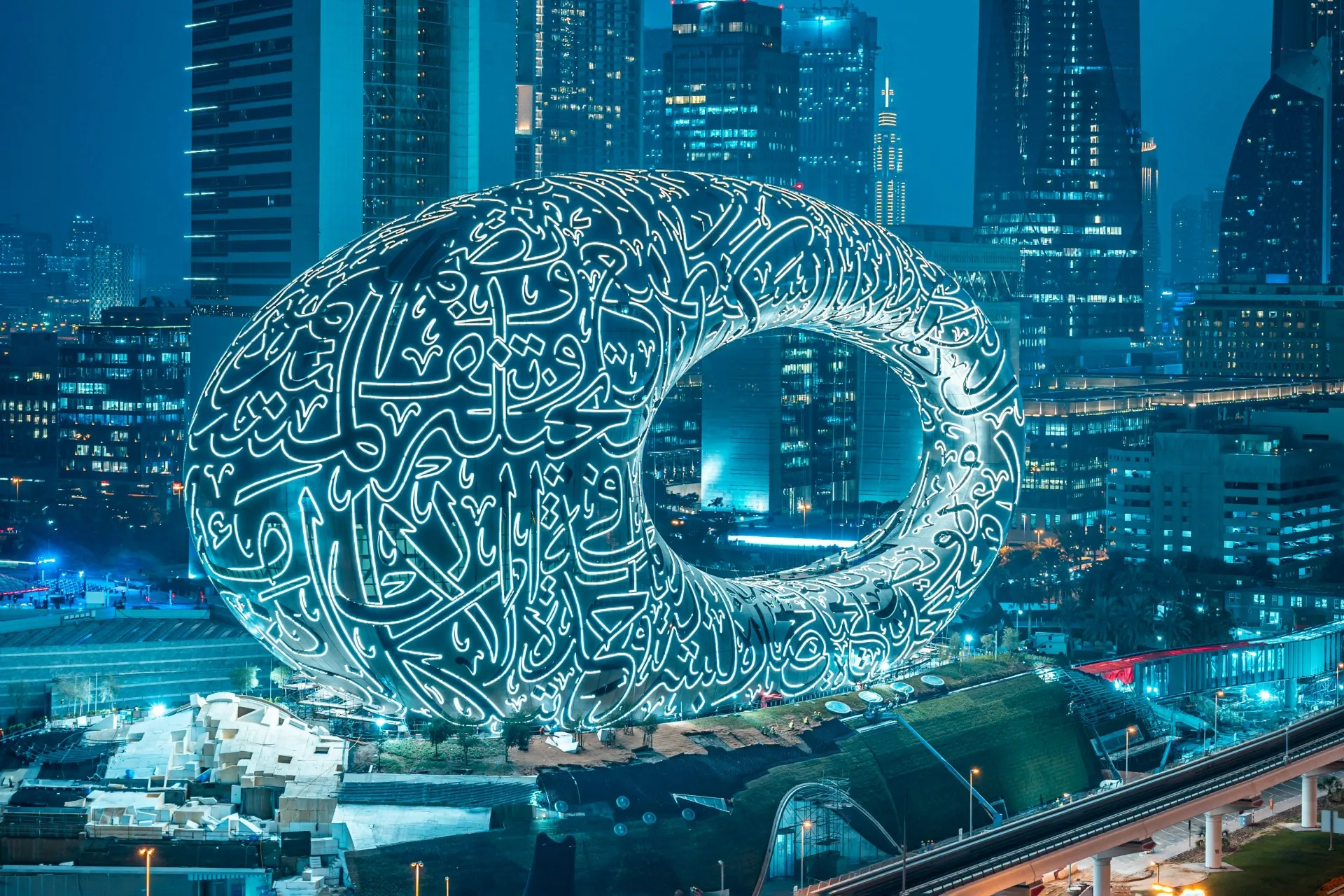
When it came time to give the Museum of the Future a physical form, architects and planners faced a challenge: how do you design a building that feels both rooted in its place and open to what lies ahead? The chosen design is a striking torus‑shaped structure that appears to float above a landscaped green mound, drawing the eye from across Sheikh Zayed Road. Its smooth, reflective surface is pierced by sweeping Arabic calligraphy, which doubles as windows that bring daylight deep into the interior. This combination of traditional script and futuristic form visually captures the museum’s central idea: that our future is shaped by our cultural memory as much as by our technological advances.
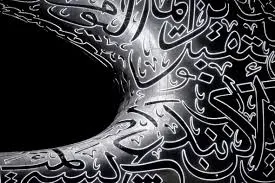
The calligraphy itself is not mere decoration, but a meaningful layer of the building’s story. It reflects inspirational quotes about the future and innovation, turning the façade into a luminous manuscript that glows at night. Seen from a distance, the building reads like a continuous loop of ideas, symbolizing continuity, curiosity, and the interplay between void and form. By day, the structure reflects the evolving sky and the movements of the city; by night, it becomes a beacon along Dubai’s main artery, hinting at the experiences hidden within. The result is a museum that begins telling its story long before visitors step through its doors.
Engineering the impossible: building the torus
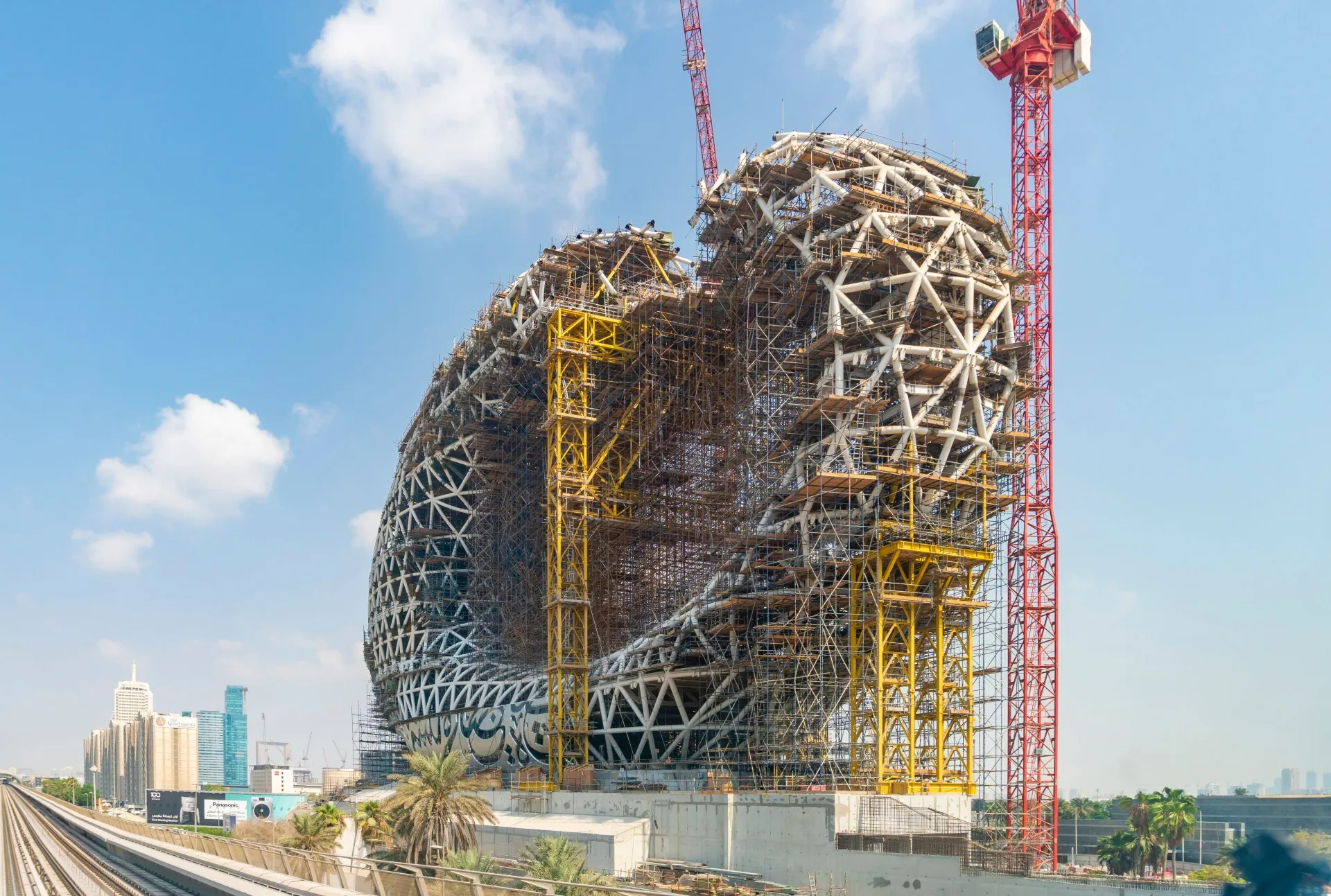
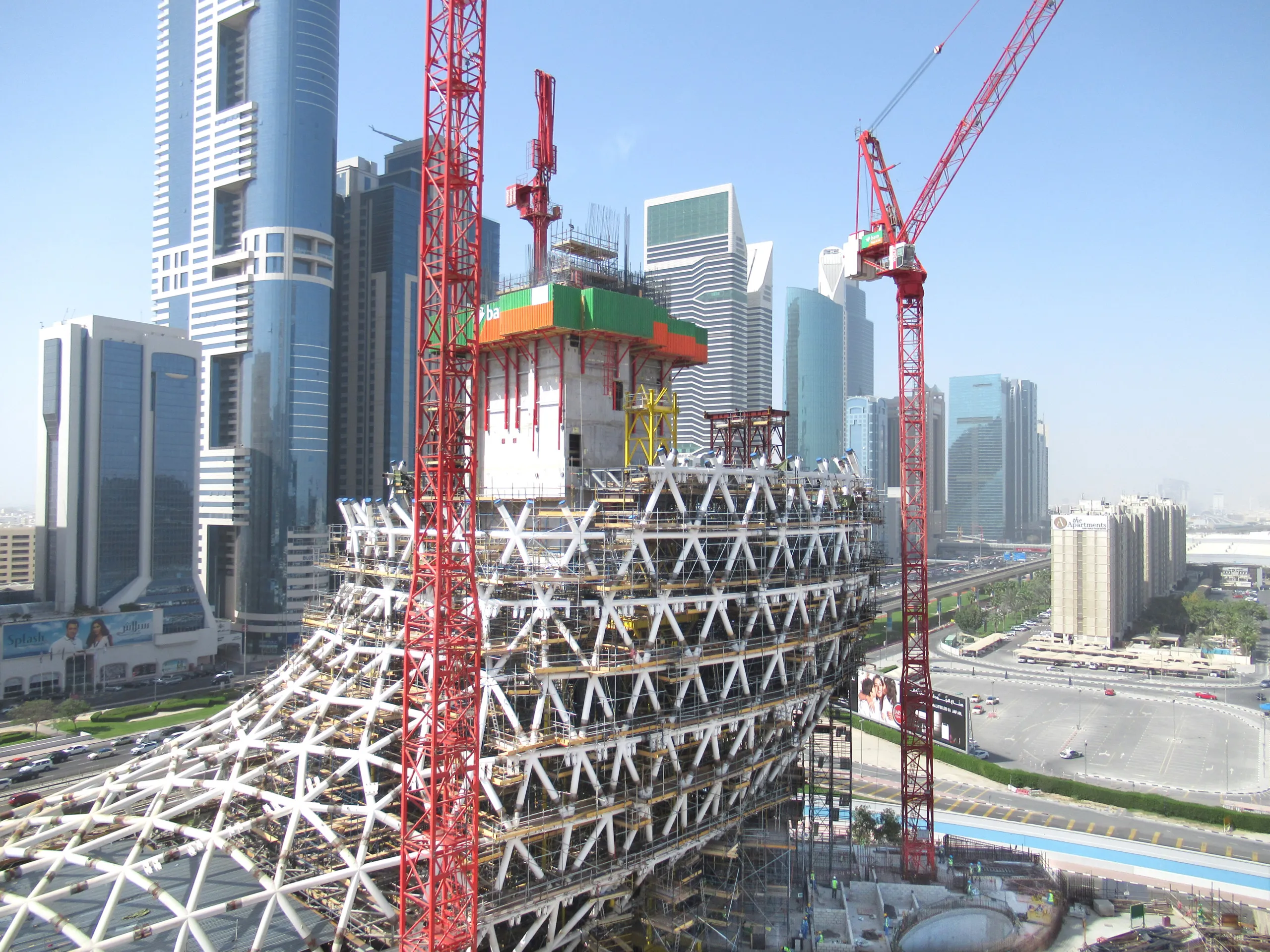
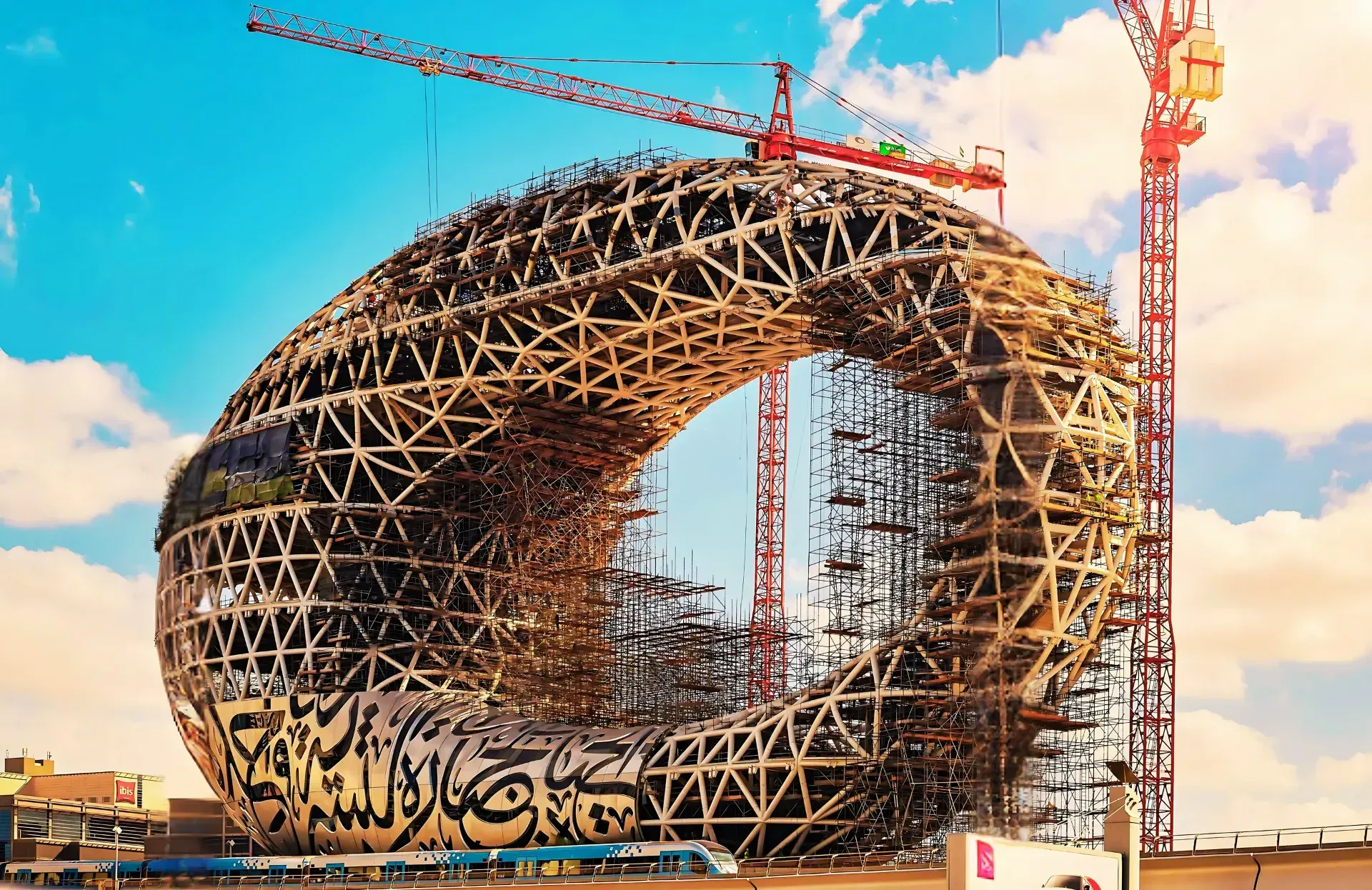
Translating a bold architectural sketch into reality required advanced engineering and a willingness to experiment. The torus shape of the Museum of the Future, with its large central void and curved surfaces, pushed the limits of conventional construction methods. Engineers developed a complex steel framework that could support the building’s weight while accommodating the intricate calligraphy openings across the façade. Each piece of the structural skeleton had to be carefully modeled, fabricated, and assembled, resulting in a lattice that looks almost like a three‑dimensional puzzle when seen during construction.
On top of this steel frame, thousands of unique façade panels were installed, each one shaped and finished to slot precisely into place. Behind the shimmering surface lies a carefully layered system of insulation, waterproofing, and environmental controls, designed to handle Dubai’s intense sun and heat. Digital tools, Building Information Modelling (BIM), and parametric design all played crucial roles in coordinating the work of architects, engineers, and contractors. The final structure stands not just as an architectural icon, but as a testament to how advanced design and engineering can come together to turn an unconventional vision into a functioning, welcoming public space.
From objects to experiences: rethinking the museum
Traditional museums typically organize their collections around objects: paintings, artifacts, and historical items displayed in glass cases. The Museum of the Future takes a different approach, using narrative journeys, immersive environments, and interactive installations as its core materials. Instead of walking past rows of static displays, visitors are invited to step into stories – boarding virtual missions, exploring imagined habitats, and encountering speculative technologies woven into dramatic soundscapes and light. Each floor acts like a chapter in a book, guiding guests through a carefully crafted storyline about possible futures for humanity.
This shift from objects to experiences required a different way of thinking about curation. Designers, technologists, writers, and researchers worked together to build environments that are emotionally engaging, scientifically informed, and accessible to a wide audience. The goal is not to dictate a single vision of what will happen, but to open up space for questions: How might we live on other planets? What would a truly sustainable city feel like? How could health and wellbeing be supported in new ways? By making visitors active participants in these questions, the Museum of the Future positions itself as a catalyst for conversation rather than a final authority.
Dubai’s innovation agenda and national vision
The Museum of the Future did not emerge in isolation; it is deeply connected to Dubai’s wider strategy around innovation, technology, and long‑term national planning. Over the past decades, the city has invested heavily in transforming itself into a global hub for business, tourism, and advanced services, while looking beyond natural resources for future growth. Initiatives focused on smart cities, artificial intelligence, space exploration, and sustainable development reflect a desire to position Dubai and the United Arab Emirates as active contributors to global technological progress.
Within this context, the Museum of the Future serves as both a symbol and a tool. It showcases the country’s openness to new ideas and its willingness to experiment with new forms of public engagement, while inviting visitors, residents, and international partners into an ongoing dialogue. The themes explored inside the museum echo many of the priorities found in national visions and strategies, from diversifying the economy to investing in education, research, and future‑oriented industries. In this way, a visit to the museum also offers a window into how Dubai sees its role in the world over the coming decades.
Inside the galleries: themes, stories, and journeys
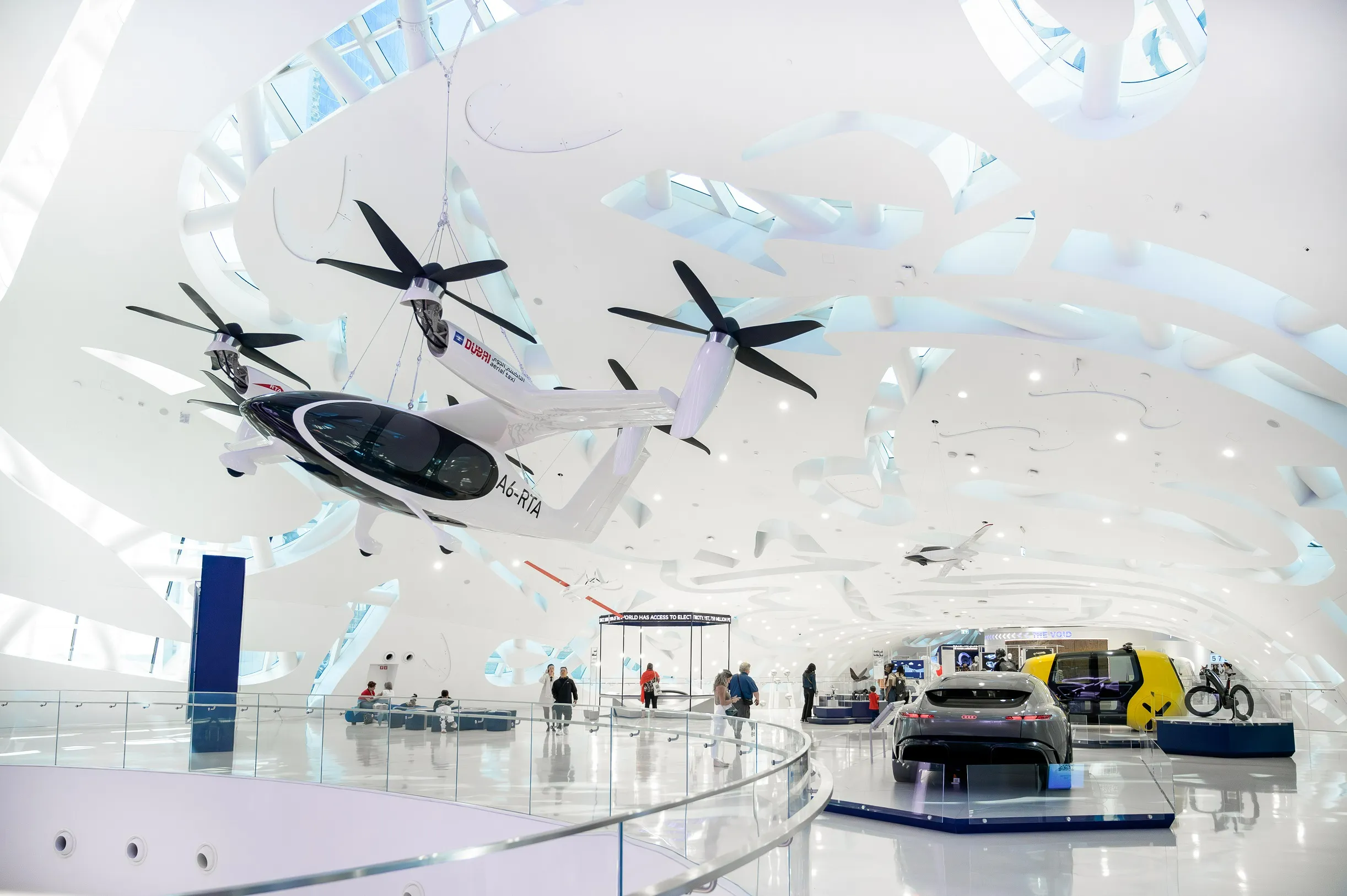
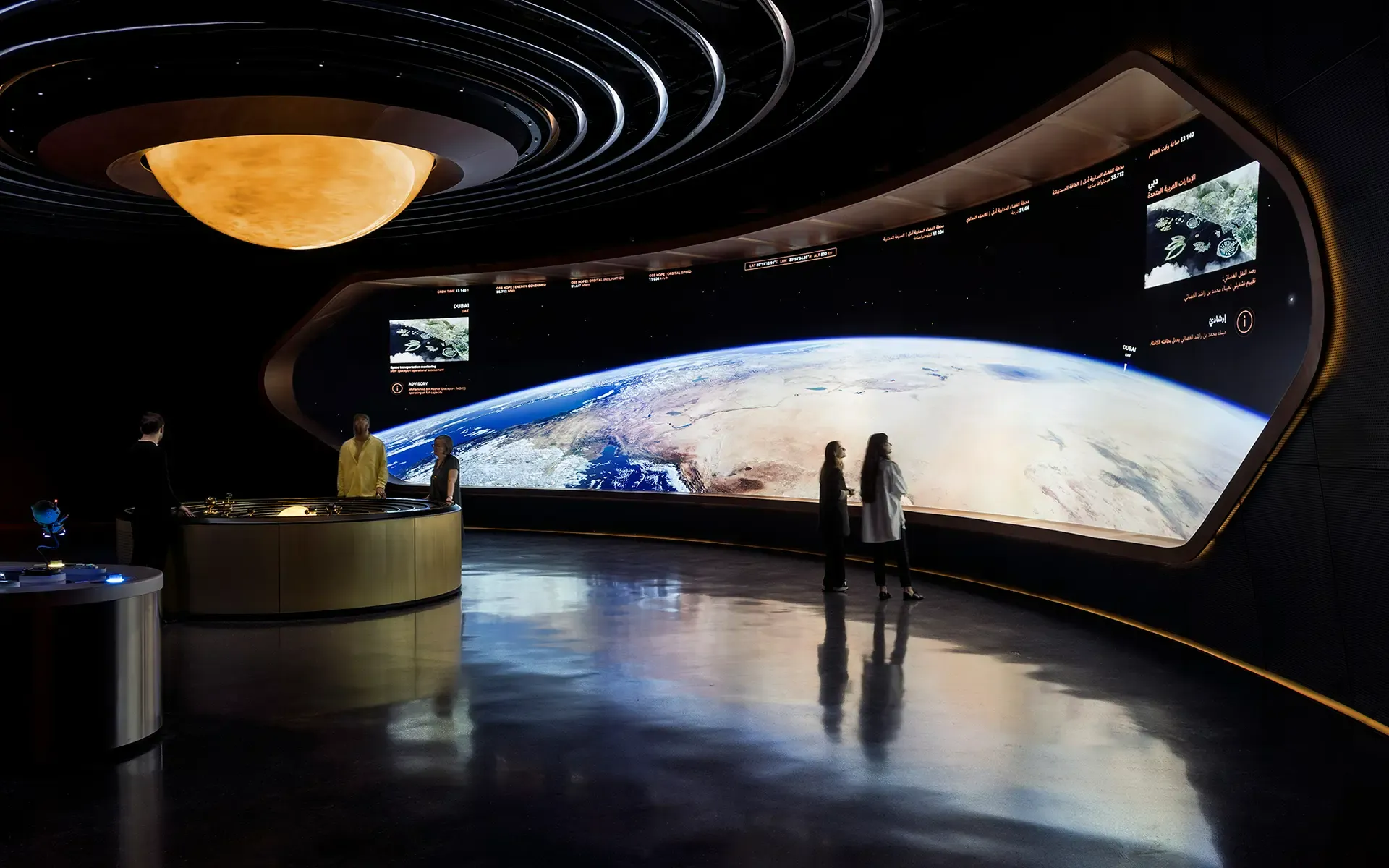
Stepping into the Museum of the Future, visitors move through a sequence of galleries that each focus on a different dimension of tomorrow’s world. One space might transport you to a future orbital station, where life beyond Earth is imagined through sound, visuals, and interactive elements. Another might immerse you in a rewilded planet, where new approaches to climate action are brought to life through vivid landscapes and imaginative scenarios. Throughout these journeys, the museum blends artistic interpretation with scientific insight, encouraging reflection rather than simply listing facts.
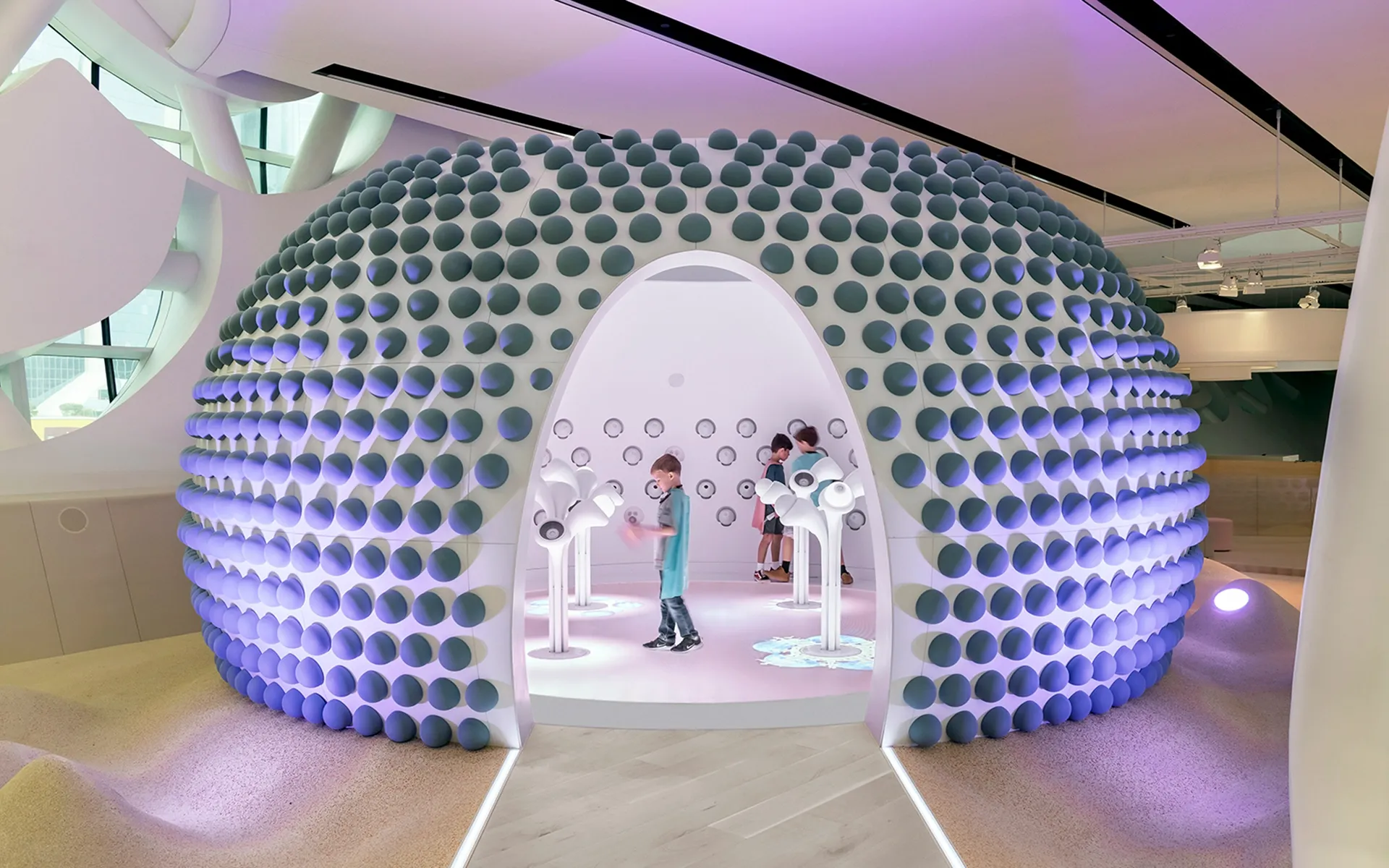
Other areas delve into personal wellbeing, mental resilience, and the relationship between humans and machines, balancing technological curiosity with human stories. Rather than overwhelming visitors with technical jargon, the galleries use simple language, guiding narration, and sensory design to make complex ideas approachable. Children and adults alike are encouraged to participate: pressing buttons, listening to messages from hypothetical futures, and imagining themselves as citizens of the worlds being portrayed. By the time you return to the ground floor, you may feel less like you’ve ‘seen an exhibition’ and more like you’ve traveled through a series of possible timelines.
Technology, sustainability, and future cities
Many of the museum’s themes revolve around big questions facing cities everywhere: how to balance growth with environmental responsibility, how to design infrastructure that serves people as well as systems, and how to harness technology without losing sight of human needs. Exhibitions explore how renewable energy, advanced materials, artificial intelligence, and new mobility solutions might reshape our urban environments. They also gesture toward the challenges ahead, from climate resilience and resource scarcity to social inclusion and mental wellbeing in rapidly changing societies.
Dubai itself offers a living case study, visible through the windows of the museum: highways, towers, transit lines, and evolving neighborhoods spread out in every direction. As visitors move between floors, they are indirectly invited to connect the stories inside with the city outside, imagining how lessons learned here might translate into real‑world decisions. In doing so, the Museum of the Future becomes not only a showcase of ideas, but a reflective mirror, prompting each person to think about how their own community could evolve in fairer, greener, and more imaginative ways.
Accessibility, inclusion, and education
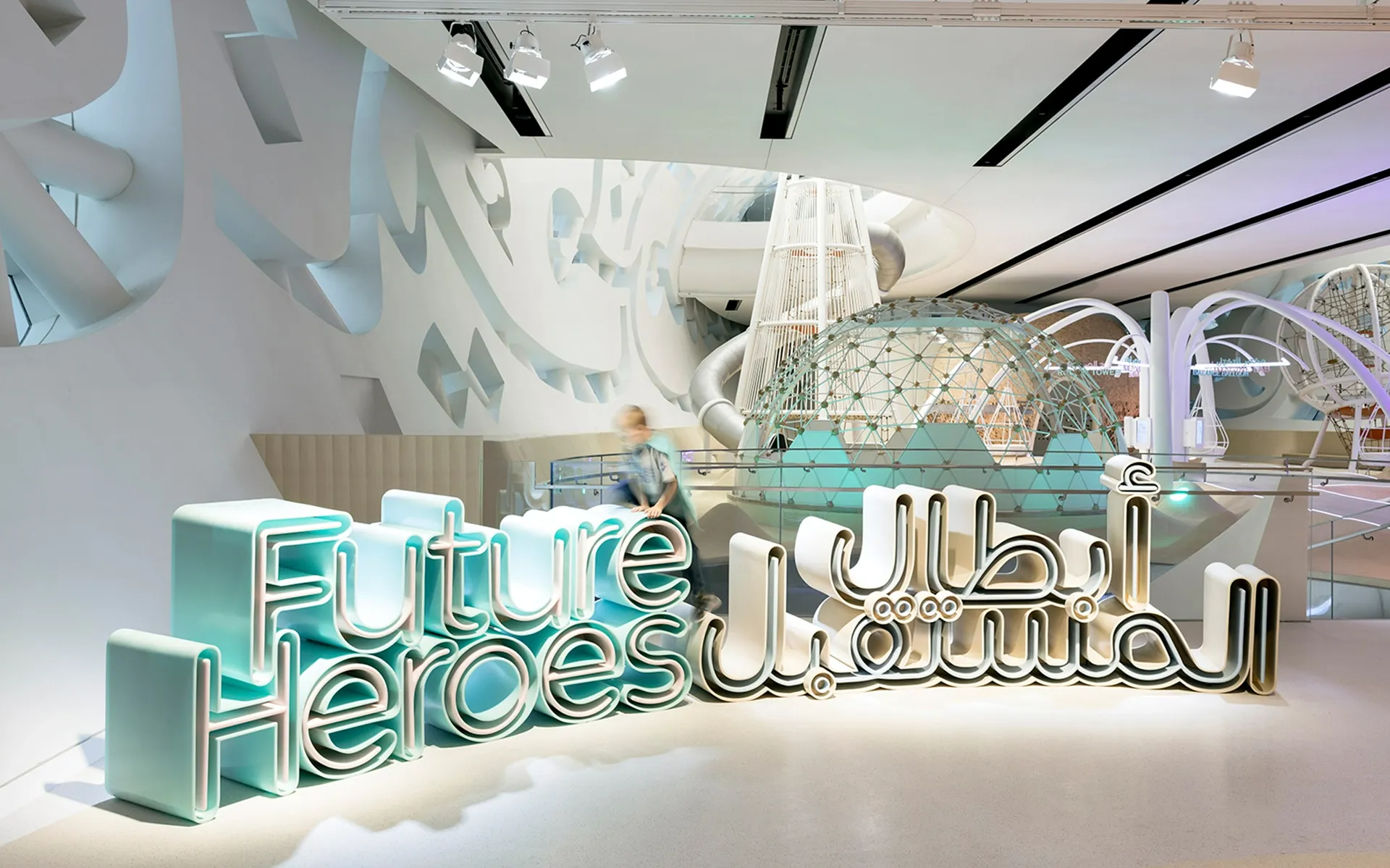
From its earliest planning stages, the Museum of the Future has aimed to be accessible to a wide spectrum of visitors, regardless of age, background, or prior knowledge of technology. Clear wayfinding, lifts, and step‑free routes support those with mobility needs, while concise explanations and visual storytelling make complex themes easier to grasp. The museum’s immersive approach can be especially engaging for younger visitors, who often respond strongly to sound, movement, and interactive installations, turning learning into an adventure rather than a chore.
Educational programs, partnerships, and events further extend the museum’s reach beyond a single visit. Schools, universities, and professional groups may engage with special sessions or curated experiences tailored to their interests, whether that’s robotics, sustainability, urban planning, or creativity. By positioning itself as a bridge between experts and the general public, the Museum of the Future helps demystify emerging technologies and invites people from all walks of life to take part in conversations about our shared future, rather than leaving those decisions solely to specialists.
Cultural impact and global attention
Since opening, the Museum of the Future has quickly become one of Dubai’s most recognizable landmarks, frequently shared in travel photos, architecture journals, and social media posts around the world. Its distinctive form, combined with the promise of immersive experiences inside, has helped position it as a must‑see attraction for visitors who want to look beyond shopping malls and beaches. Journalists, designers, and travelers alike often highlight the museum as a symbol of Dubai’s restless experimentation and its willingness to invest in cultural projects that look forward rather than back.
But the museum’s impact is not limited to tourism or aesthetics. Conferences, talks, and themed events hosted in and around the building draw entrepreneurs, researchers, and policymakers from different countries, turning the site into a gathering place for dialogue about pressing global issues. Over time, these exchanges can influence how projects are funded, how regulations evolve, and how new collaborations are formed. In this sense, the Museum of the Future acts both as a public attraction and as a quiet engine behind the scenes, helping to knit together networks of people who care about shaping better futures.
Tickets, visitors, and evolving experiences
To keep the experience comfortable and focused, the Museum of the Future operates with timed entry tickets and carefully managed visitor flows. This approach allows the galleries to remain immersive and avoids the sense of overcrowding that can sometimes affect popular attractions. As demand has grown, ticketing systems and visitor services have evolved, offering clearer information about time slots, multilingual support, and optional combination packages with other Dubai experiences.
Inside, the exhibitions themselves are designed to evolve over time. While certain core themes and journeys remain, updates and new elements may be introduced as technology advances and global conversations shift. This flexibility reflects the museum’s central philosophy: the future is not fixed, and any honest attempt to explore it must be willing to adapt. Returning visitors may find changes in emphasis, fresh narratives, or entirely new spaces, making the Museum of the Future less a one‑time destination and more a living work in progress.
Preservation, adaptation, and long‑term relevance
Unlike traditional museums, which often measure their success by the size and rarity of their collections, the Museum of the Future measures success in more intangible ways: conversations sparked, perspectives shifted, and curiosity awakened. This raises a different kind of preservation challenge: how do you maintain the relevance of experiences that are rooted in rapidly evolving technologies and ideas? The answer lies in thoughtful curation, ongoing research, and a willingness to rethink exhibitions as the world changes.
Behind the scenes, teams must balance technical maintenance, accessibility updates, and content refreshes with the need to keep the museum open and welcoming to daily visitors. Digital installations require regular care; stories must be reviewed in light of new scientific developments; and feedback from guests informs future improvements. In embracing this cycle of adaptation, the Museum of the Future becomes a living document of our relationship with technology and possibility – always incomplete, always being revised, and always inviting new voices into the conversation.
The museum in Dubai’s urban landscape
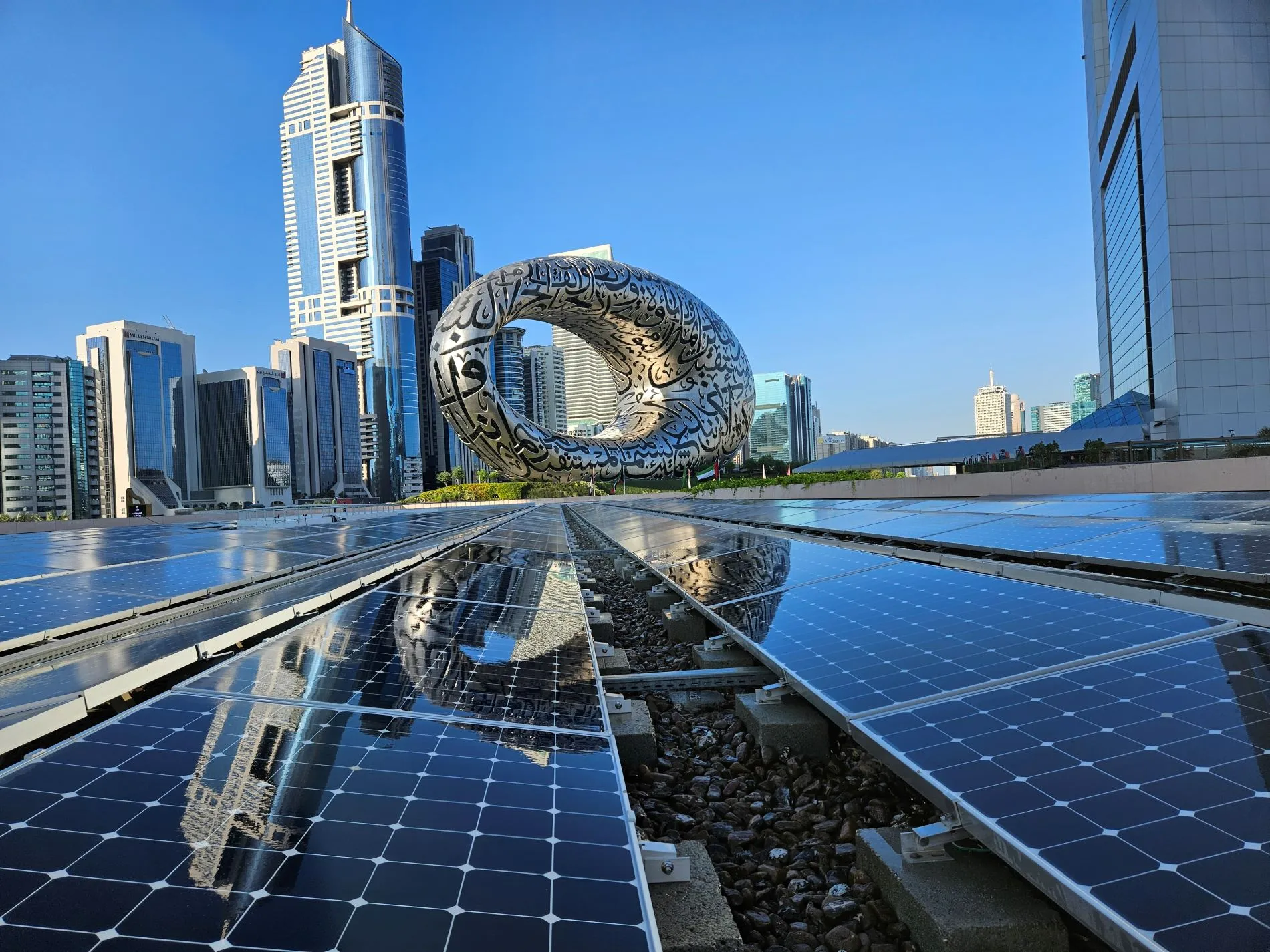
Set along one of Dubai’s busiest stretches of Sheikh Zayed Road, the Museum of the Future is more than a striking object on the skyline; it is a conversation partner for the city around it. Surrounded by office towers, hotels, and transport lines, the building stands at the crossroads of daily life, where commuters, business travelers, and tourists pass by in a constant flow. Its presence serves as a reminder that even in the thick of urban routines, there is room for reflection on what lies ahead and how our choices today will shape tomorrow’s streets, skylines, and communities.
Seen from different angles, the museum frames and reframes the city: from one side, it appears as a luminous ring hovering over the highway; from another, it aligns with older landmarks and newer towers, placing it within Dubai’s evolving narrative. Inside, windows and glimpses of the outside world help visitors connect the imagined futures they see in the galleries with the very real, dynamic metropolis beyond. In this way, the Museum of the Future is both a destination and a lens, inviting everyone who visits – or even simply passes by – to look at Dubai, and at their own cities, with fresh eyes.
Why the Museum of the Future matters
In a world filled with uncertainty, rapid change, and competing narratives about what comes next, the Museum of the Future offers something rare: a space devoted to exploring possibility with curiosity rather than fear. By blending art, technology, storytelling, and thoughtful design, it encourages visitors to imagine futures that are creative, inclusive, and responsible, instead of assuming that tomorrow will simply be a more automated version of today. This act of imagining is not a luxury – it is a crucial step in deciding which paths we want to pursue, and which we would rather avoid.
Ultimately, the museum matters because it invites each of us to see ourselves as participants in shaping the future, not just as passive observers. Whether you leave with a new interest in sustainability, a fascination for space travel, or simply a renewed sense of wonder about human ingenuity, the experience can linger long after you step back onto Sheikh Zayed Road. In its soaring architecture and carefully crafted galleries, the Museum of the Future embodies a simple yet powerful message: the future is not something that happens to us – it is something we build, choice by choice, story by story.
Table of Contents
Seeds of an idea: imagining a future museum
Long before the Museum of the Future opened its doors, the idea behind it began as a question: what if a museum could focus not on the past, but on the possibilities of tomorrow? In a city already known for record‑breaking towers and ambitious projects, Dubai’s leaders imagined a space where innovators, thinkers, and everyday visitors could gather around prototypes, experiments, and scenarios rather than static relics. The goal was not to predict the future with certainty, but to create a place where different futures could be explored, debated, and experienced firsthand, sparking fresh conversations about responsibility, opportunity, and imagination.
This vision slowly coalesced through conferences, future‑focused initiatives, and discussions within the United Arab Emirates about how technology and human creativity might shape the country’s next chapters. As the idea matured, the concept of a ‘museum’ expanded beyond galleries filled with objects to an evolving hub, where exhibitions would be updated regularly, and visitors would be invited to step into narrative worlds. In this way, the seeds of the Museum of the Future echoed a broader ambition in Dubai: to be not only a place that showcases innovation, but a living platform where new ideas are tested, refined, and shared with the world.
Designing a landmark: architecture and calligraphy
When it came time to give the Museum of the Future a physical form, architects and planners faced a challenge: how do you design a building that feels both rooted in its place and open to what lies ahead? The chosen design is a striking torus‑shaped structure that appears to float above a landscaped green mound, drawing the eye from across Sheikh Zayed Road. Its smooth, reflective surface is pierced by sweeping Arabic calligraphy, which doubles as windows that bring daylight deep into the interior. This combination of traditional script and futuristic form visually captures the museum’s central idea: that our future is shaped by our cultural memory as much as by our technological advances.
The calligraphy itself is not mere decoration, but a meaningful layer of the building’s story. It reflects inspirational quotes about the future and innovation, turning the façade into a luminous manuscript that glows at night. Seen from a distance, the building reads like a continuous loop of ideas, symbolizing continuity, curiosity, and the interplay between void and form. By day, the structure reflects the evolving sky and the movements of the city; by night, it becomes a beacon along Dubai’s main artery, hinting at the experiences hidden within. The result is a museum that begins telling its story long before visitors step through its doors.
Engineering the impossible: building the torus
Translating a bold architectural sketch into reality required advanced engineering and a willingness to experiment. The torus shape of the Museum of the Future, with its large central void and curved surfaces, pushed the limits of conventional construction methods. Engineers developed a complex steel framework that could support the building’s weight while accommodating the intricate calligraphy openings across the façade. Each piece of the structural skeleton had to be carefully modeled, fabricated, and assembled, resulting in a lattice that looks almost like a three‑dimensional puzzle when seen during construction.
On top of this steel frame, thousands of unique façade panels were installed, each one shaped and finished to slot precisely into place. Behind the shimmering surface lies a carefully layered system of insulation, waterproofing, and environmental controls, designed to handle Dubai’s intense sun and heat. Digital tools, Building Information Modelling (BIM), and parametric design all played crucial roles in coordinating the work of architects, engineers, and contractors. The final structure stands not just as an architectural icon, but as a testament to how advanced design and engineering can come together to turn an unconventional vision into a functioning, welcoming public space.
From objects to experiences: rethinking the museum
Traditional museums typically organize their collections around objects: paintings, artifacts, and historical items displayed in glass cases. The Museum of the Future takes a different approach, using narrative journeys, immersive environments, and interactive installations as its core materials. Instead of walking past rows of static displays, visitors are invited to step into stories – boarding virtual missions, exploring imagined habitats, and encountering speculative technologies woven into dramatic soundscapes and light. Each floor acts like a chapter in a book, guiding guests through a carefully crafted storyline about possible futures for humanity.
This shift from objects to experiences required a different way of thinking about curation. Designers, technologists, writers, and researchers worked together to build environments that are emotionally engaging, scientifically informed, and accessible to a wide audience. The goal is not to dictate a single vision of what will happen, but to open up space for questions: How might we live on other planets? What would a truly sustainable city feel like? How could health and wellbeing be supported in new ways? By making visitors active participants in these questions, the Museum of the Future positions itself as a catalyst for conversation rather than a final authority.
Dubai’s innovation agenda and national vision
The Museum of the Future did not emerge in isolation; it is deeply connected to Dubai’s wider strategy around innovation, technology, and long‑term national planning. Over the past decades, the city has invested heavily in transforming itself into a global hub for business, tourism, and advanced services, while looking beyond natural resources for future growth. Initiatives focused on smart cities, artificial intelligence, space exploration, and sustainable development reflect a desire to position Dubai and the United Arab Emirates as active contributors to global technological progress.
Within this context, the Museum of the Future serves as both a symbol and a tool. It showcases the country’s openness to new ideas and its willingness to experiment with new forms of public engagement, while inviting visitors, residents, and international partners into an ongoing dialogue. The themes explored inside the museum echo many of the priorities found in national visions and strategies, from diversifying the economy to investing in education, research, and future‑oriented industries. In this way, a visit to the museum also offers a window into how Dubai sees its role in the world over the coming decades.
Inside the galleries: themes, stories, and journeys
Stepping into the Museum of the Future, visitors move through a sequence of galleries that each focus on a different dimension of tomorrow’s world. One space might transport you to a future orbital station, where life beyond Earth is imagined through sound, visuals, and interactive elements. Another might immerse you in a rewilded planet, where new approaches to climate action are brought to life through vivid landscapes and imaginative scenarios. Throughout these journeys, the museum blends artistic interpretation with scientific insight, encouraging reflection rather than simply listing facts.
Other areas delve into personal wellbeing, mental resilience, and the relationship between humans and machines, balancing technological curiosity with human stories. Rather than overwhelming visitors with technical jargon, the galleries use simple language, guiding narration, and sensory design to make complex ideas approachable. Children and adults alike are encouraged to participate: pressing buttons, listening to messages from hypothetical futures, and imagining themselves as citizens of the worlds being portrayed. By the time you return to the ground floor, you may feel less like you’ve ‘seen an exhibition’ and more like you’ve traveled through a series of possible timelines.
Technology, sustainability, and future cities
Many of the museum’s themes revolve around big questions facing cities everywhere: how to balance growth with environmental responsibility, how to design infrastructure that serves people as well as systems, and how to harness technology without losing sight of human needs. Exhibitions explore how renewable energy, advanced materials, artificial intelligence, and new mobility solutions might reshape our urban environments. They also gesture toward the challenges ahead, from climate resilience and resource scarcity to social inclusion and mental wellbeing in rapidly changing societies.
Dubai itself offers a living case study, visible through the windows of the museum: highways, towers, transit lines, and evolving neighborhoods spread out in every direction. As visitors move between floors, they are indirectly invited to connect the stories inside with the city outside, imagining how lessons learned here might translate into real‑world decisions. In doing so, the Museum of the Future becomes not only a showcase of ideas, but a reflective mirror, prompting each person to think about how their own community could evolve in fairer, greener, and more imaginative ways.
Accessibility, inclusion, and education
From its earliest planning stages, the Museum of the Future has aimed to be accessible to a wide spectrum of visitors, regardless of age, background, or prior knowledge of technology. Clear wayfinding, lifts, and step‑free routes support those with mobility needs, while concise explanations and visual storytelling make complex themes easier to grasp. The museum’s immersive approach can be especially engaging for younger visitors, who often respond strongly to sound, movement, and interactive installations, turning learning into an adventure rather than a chore.
Educational programs, partnerships, and events further extend the museum’s reach beyond a single visit. Schools, universities, and professional groups may engage with special sessions or curated experiences tailored to their interests, whether that’s robotics, sustainability, urban planning, or creativity. By positioning itself as a bridge between experts and the general public, the Museum of the Future helps demystify emerging technologies and invites people from all walks of life to take part in conversations about our shared future, rather than leaving those decisions solely to specialists.
Cultural impact and global attention
Since opening, the Museum of the Future has quickly become one of Dubai’s most recognizable landmarks, frequently shared in travel photos, architecture journals, and social media posts around the world. Its distinctive form, combined with the promise of immersive experiences inside, has helped position it as a must‑see attraction for visitors who want to look beyond shopping malls and beaches. Journalists, designers, and travelers alike often highlight the museum as a symbol of Dubai’s restless experimentation and its willingness to invest in cultural projects that look forward rather than back.
But the museum’s impact is not limited to tourism or aesthetics. Conferences, talks, and themed events hosted in and around the building draw entrepreneurs, researchers, and policymakers from different countries, turning the site into a gathering place for dialogue about pressing global issues. Over time, these exchanges can influence how projects are funded, how regulations evolve, and how new collaborations are formed. In this sense, the Museum of the Future acts both as a public attraction and as a quiet engine behind the scenes, helping to knit together networks of people who care about shaping better futures.
Tickets, visitors, and evolving experiences
To keep the experience comfortable and focused, the Museum of the Future operates with timed entry tickets and carefully managed visitor flows. This approach allows the galleries to remain immersive and avoids the sense of overcrowding that can sometimes affect popular attractions. As demand has grown, ticketing systems and visitor services have evolved, offering clearer information about time slots, multilingual support, and optional combination packages with other Dubai experiences.
Inside, the exhibitions themselves are designed to evolve over time. While certain core themes and journeys remain, updates and new elements may be introduced as technology advances and global conversations shift. This flexibility reflects the museum’s central philosophy: the future is not fixed, and any honest attempt to explore it must be willing to adapt. Returning visitors may find changes in emphasis, fresh narratives, or entirely new spaces, making the Museum of the Future less a one‑time destination and more a living work in progress.
Preservation, adaptation, and long‑term relevance
Unlike traditional museums, which often measure their success by the size and rarity of their collections, the Museum of the Future measures success in more intangible ways: conversations sparked, perspectives shifted, and curiosity awakened. This raises a different kind of preservation challenge: how do you maintain the relevance of experiences that are rooted in rapidly evolving technologies and ideas? The answer lies in thoughtful curation, ongoing research, and a willingness to rethink exhibitions as the world changes.
Behind the scenes, teams must balance technical maintenance, accessibility updates, and content refreshes with the need to keep the museum open and welcoming to daily visitors. Digital installations require regular care; stories must be reviewed in light of new scientific developments; and feedback from guests informs future improvements. In embracing this cycle of adaptation, the Museum of the Future becomes a living document of our relationship with technology and possibility – always incomplete, always being revised, and always inviting new voices into the conversation.
The museum in Dubai’s urban landscape
Set along one of Dubai’s busiest stretches of Sheikh Zayed Road, the Museum of the Future is more than a striking object on the skyline; it is a conversation partner for the city around it. Surrounded by office towers, hotels, and transport lines, the building stands at the crossroads of daily life, where commuters, business travelers, and tourists pass by in a constant flow. Its presence serves as a reminder that even in the thick of urban routines, there is room for reflection on what lies ahead and how our choices today will shape tomorrow’s streets, skylines, and communities.
Seen from different angles, the museum frames and reframes the city: from one side, it appears as a luminous ring hovering over the highway; from another, it aligns with older landmarks and newer towers, placing it within Dubai’s evolving narrative. Inside, windows and glimpses of the outside world help visitors connect the imagined futures they see in the galleries with the very real, dynamic metropolis beyond. In this way, the Museum of the Future is both a destination and a lens, inviting everyone who visits – or even simply passes by – to look at Dubai, and at their own cities, with fresh eyes.
Why the Museum of the Future matters
In a world filled with uncertainty, rapid change, and competing narratives about what comes next, the Museum of the Future offers something rare: a space devoted to exploring possibility with curiosity rather than fear. By blending art, technology, storytelling, and thoughtful design, it encourages visitors to imagine futures that are creative, inclusive, and responsible, instead of assuming that tomorrow will simply be a more automated version of today. This act of imagining is not a luxury – it is a crucial step in deciding which paths we want to pursue, and which we would rather avoid.
Ultimately, the museum matters because it invites each of us to see ourselves as participants in shaping the future, not just as passive observers. Whether you leave with a new interest in sustainability, a fascination for space travel, or simply a renewed sense of wonder about human ingenuity, the experience can linger long after you step back onto Sheikh Zayed Road. In its soaring architecture and carefully crafted galleries, the Museum of the Future embodies a simple yet powerful message: the future is not something that happens to us – it is something we build, choice by choice, story by story.